
The Daily Pour · Week 2 · Recipe Formulation
From the Bench · Wednesday, November 18, 2026
Taste the Recipe: A Side-by-Side at the Bench
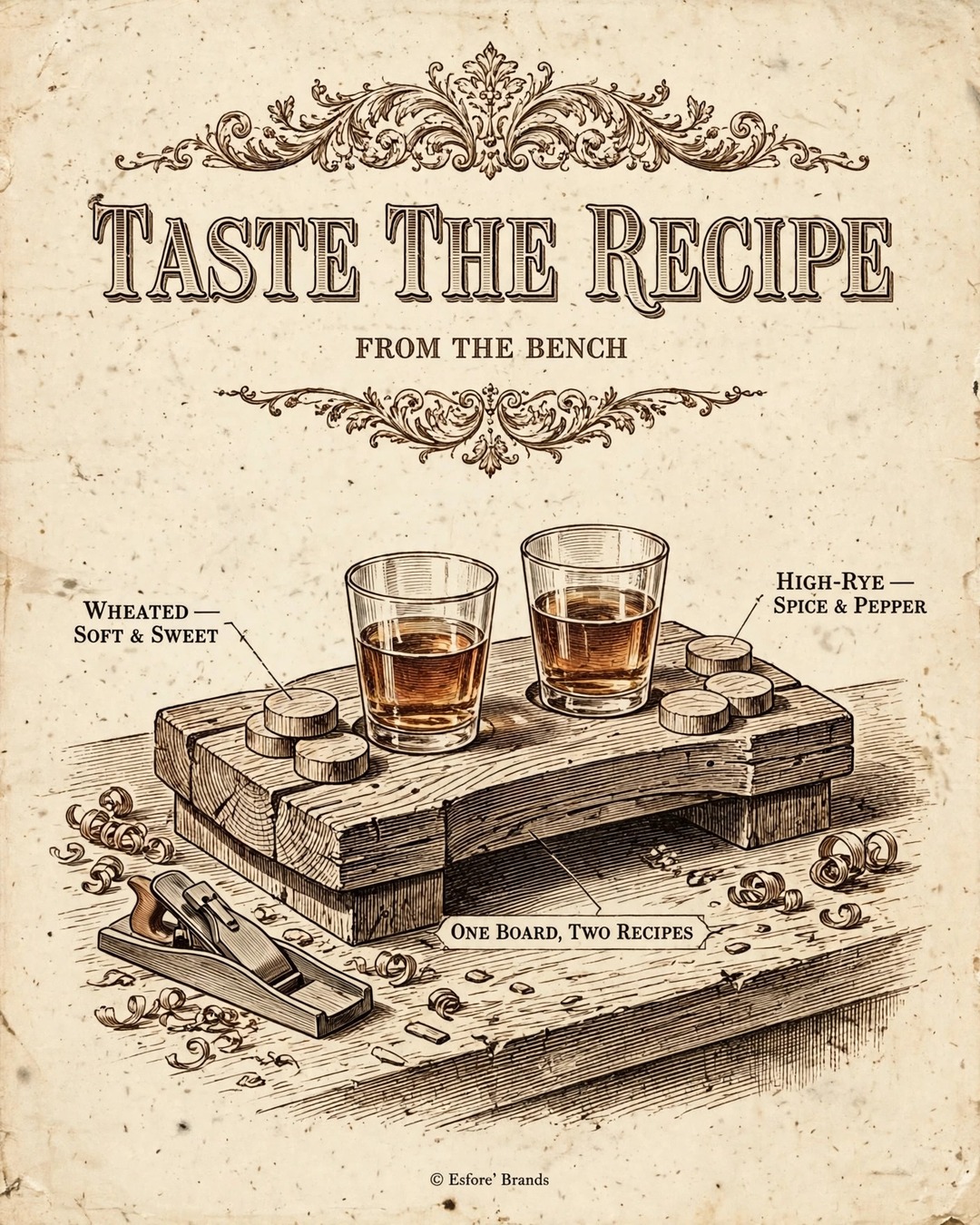
The fastest way to understand a mash bill is to taste two of them against each other. The setup is simple: one wheated bourbon and one high-rye bourbon, two glasses on the same flight board, same proof range, same room. The only variable is the recipe.
Pick bottles that are easy to find and honest about what they are. Maker's Mark is the classic wheated classroom pour — 70 percent corn, 16 percent red winter wheat, 14 percent malted barley. Bulleit is the high-rye counterpart — 68 percent corn, 28 percent rye, 4 percent malted barley. Nothing exotic, nothing rare; the lesson is in the contrast, not the price tag.
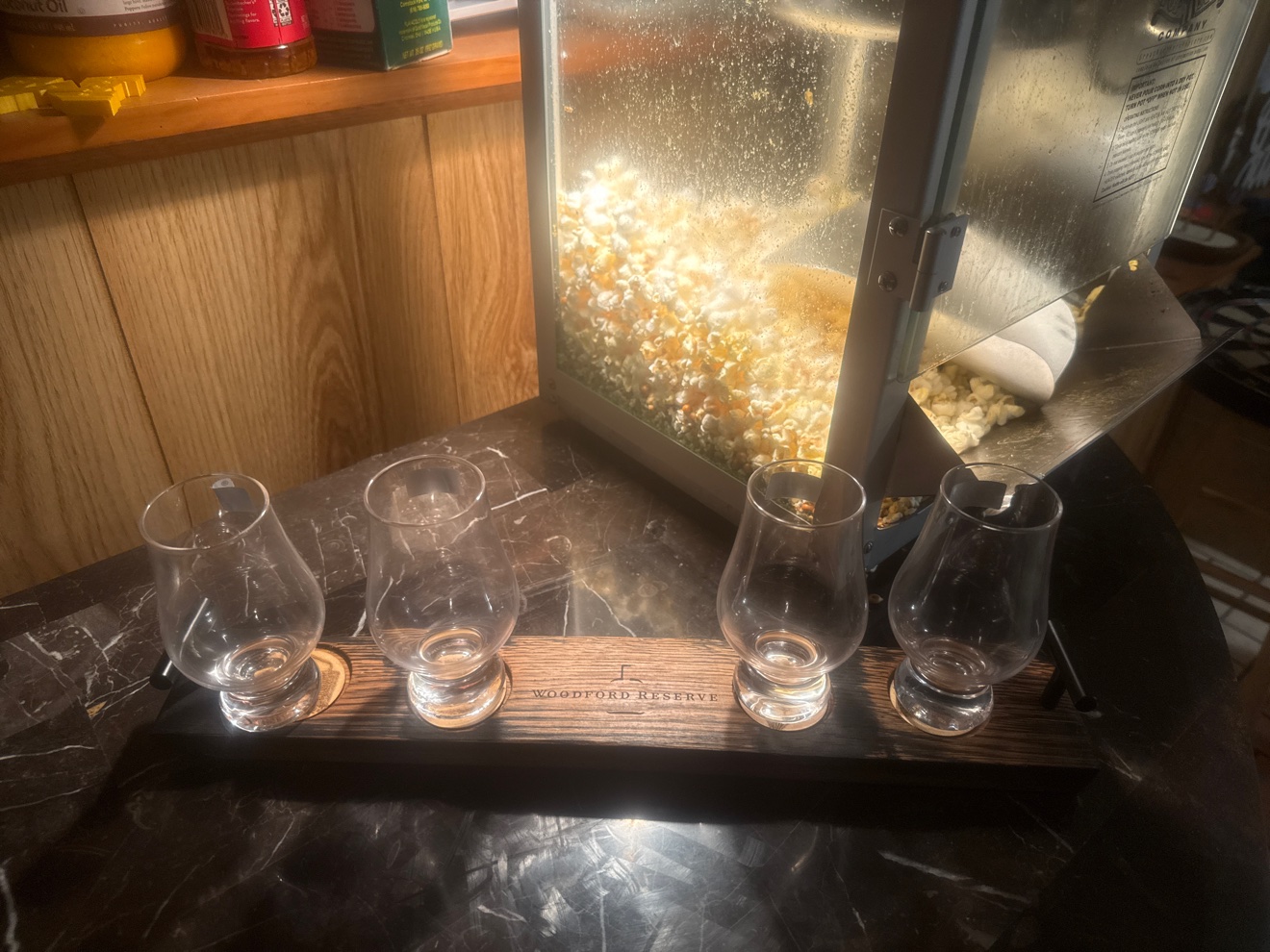
Order matters. Pour the wheated first. Nose it: soft, sweet, a little bready, honey underneath. Sip it: round, gentle, caramel and vanilla leading. Then the high-rye. The nose alone tells the story — pepper, mint, a little cinnamon bite. The sip comes in spicier and finishes drier, with a warm tingle that the wheated never had. If you reverse the order, the rye's spice numbs your palate and the wheat's softness gets lost. Soft first, spice second.
Run it the way we run tastings at the bench: POUR, NOSE, SIP, SAVOR — the same order our flight boards' sequence chips lay out for you. A hardwood chip under each glass marks which pour is which, so the comparison stays honest when the glasses start looking alike.
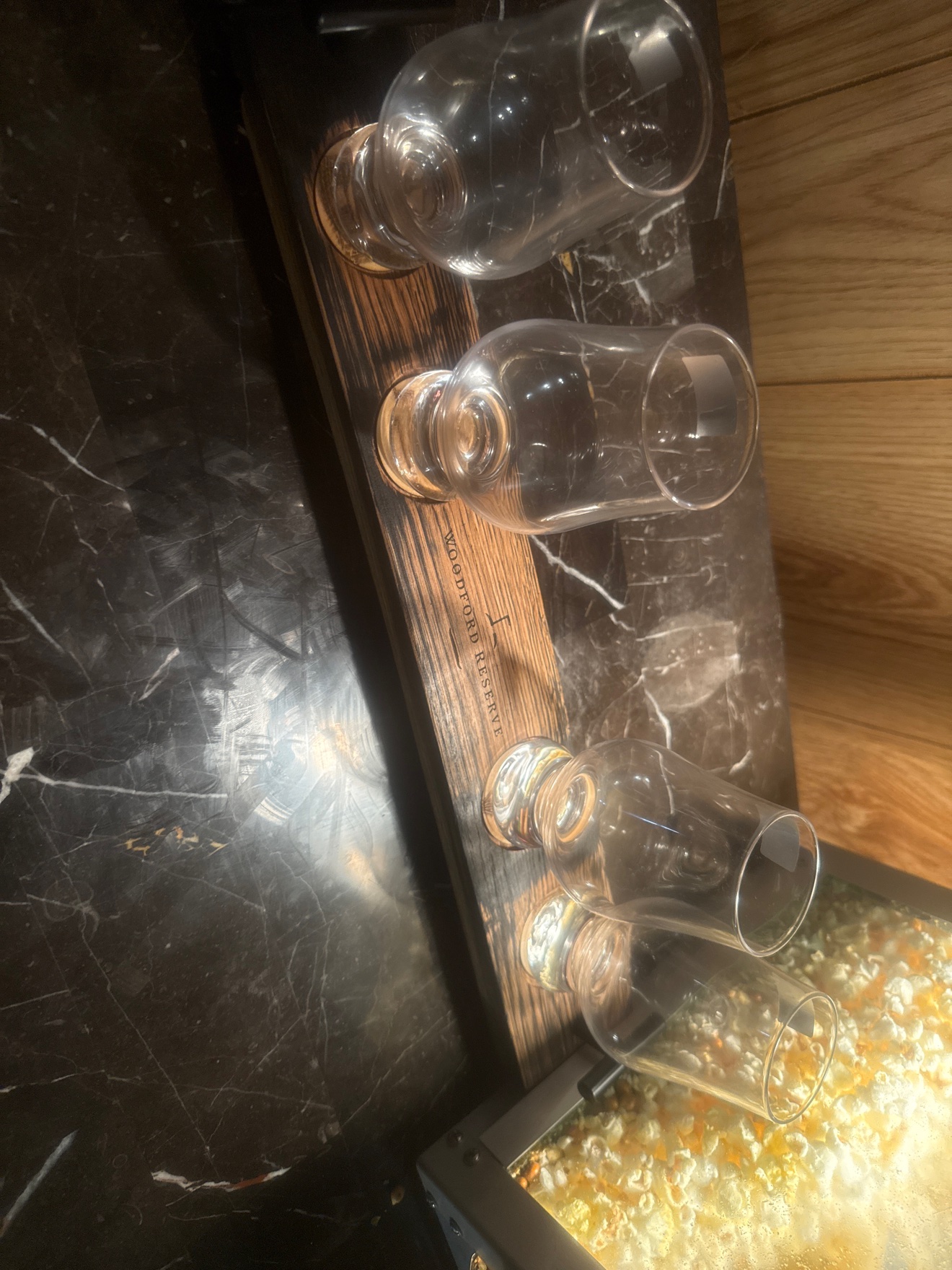
And the board itself is part of the story. A stave flight board is a retired barrel stave — wood that spent years holding bourbon — given a second life as the stage for the tasting. The vessel that made the bourbon now presents it. There's something right about that.
Try the test this week. Two glasses, one board, one recipe swap — and you'll never read a mash bill the same way again.
The Daily Pour is Esfore' Brands' daily bourbon lesson — a new lesson every day on Instagram @esfore_brands, and the full story here on the blog. Good Bourbon, Good People, Great Stories. That's a Good Pour! – Coop
← Previous lesson: Corn: The Backbone · Next lesson: Yeast: The Living Ingredient →