
The Daily Pour · Week 1 · Anatomy of a Barrel
Bourbon Lore · Saturday, November 14, 2026
The Charred Interior: Fire, Sugar, and the Red Layer
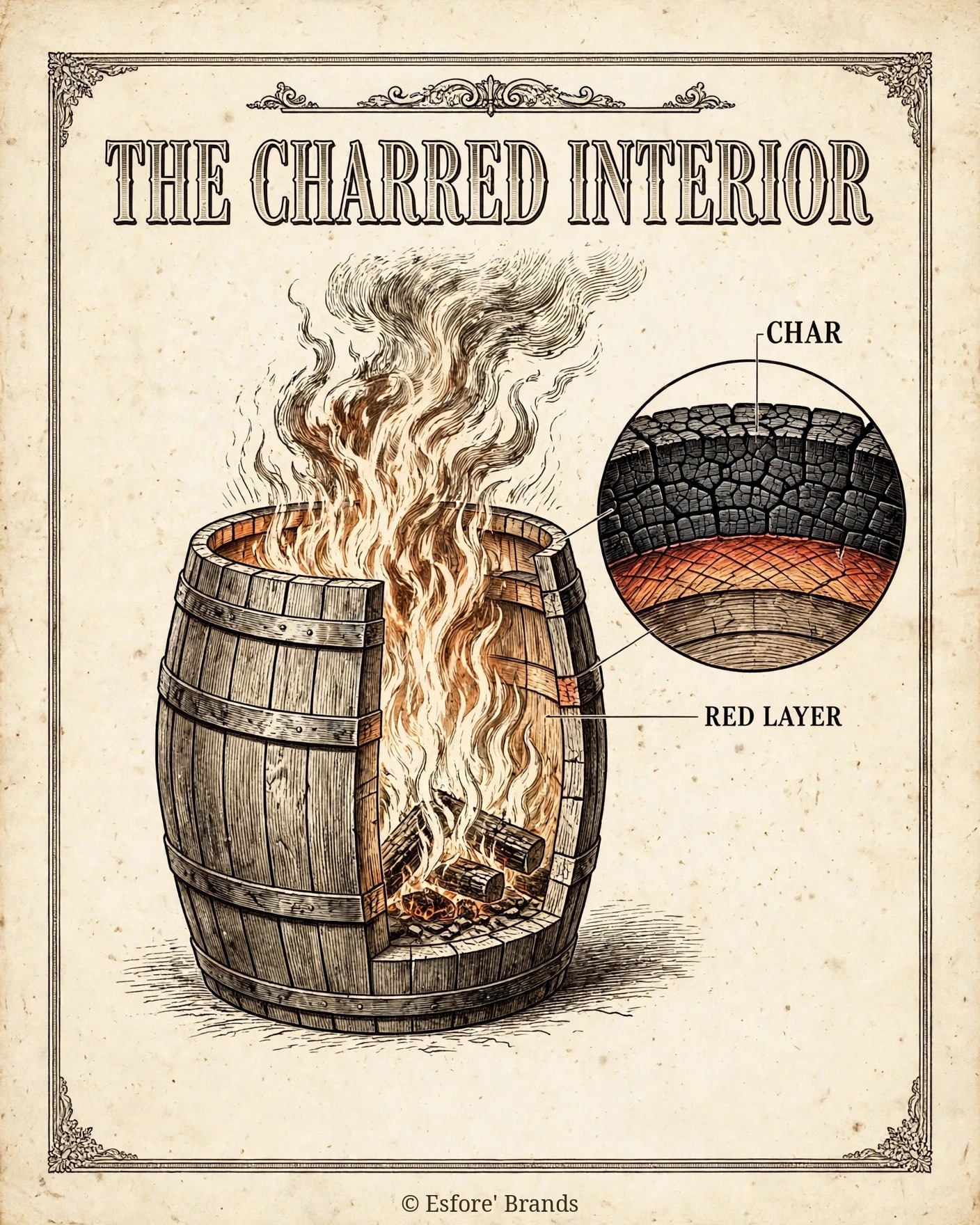
The most dramatic moment in a barrel's life happens before it ever meets whiskey: the cooper sets its interior on fire.
Charring is done over open flame, the barrel rolled and turned so the fire takes evenly. Coopers sell the result by grade — char levels 1 through 4, lightest to heaviest. A No. 4 char, the heaviest standard grade, burns until the oak surface checks and cracks into a rough, scaly pattern that bourbon people instantly recognize: alligator char, named for its resemblance to hide. Exact burn times vary by cooperage — a heavy char is often in the neighborhood of a minute — but the alligator crackle is the visible goal.
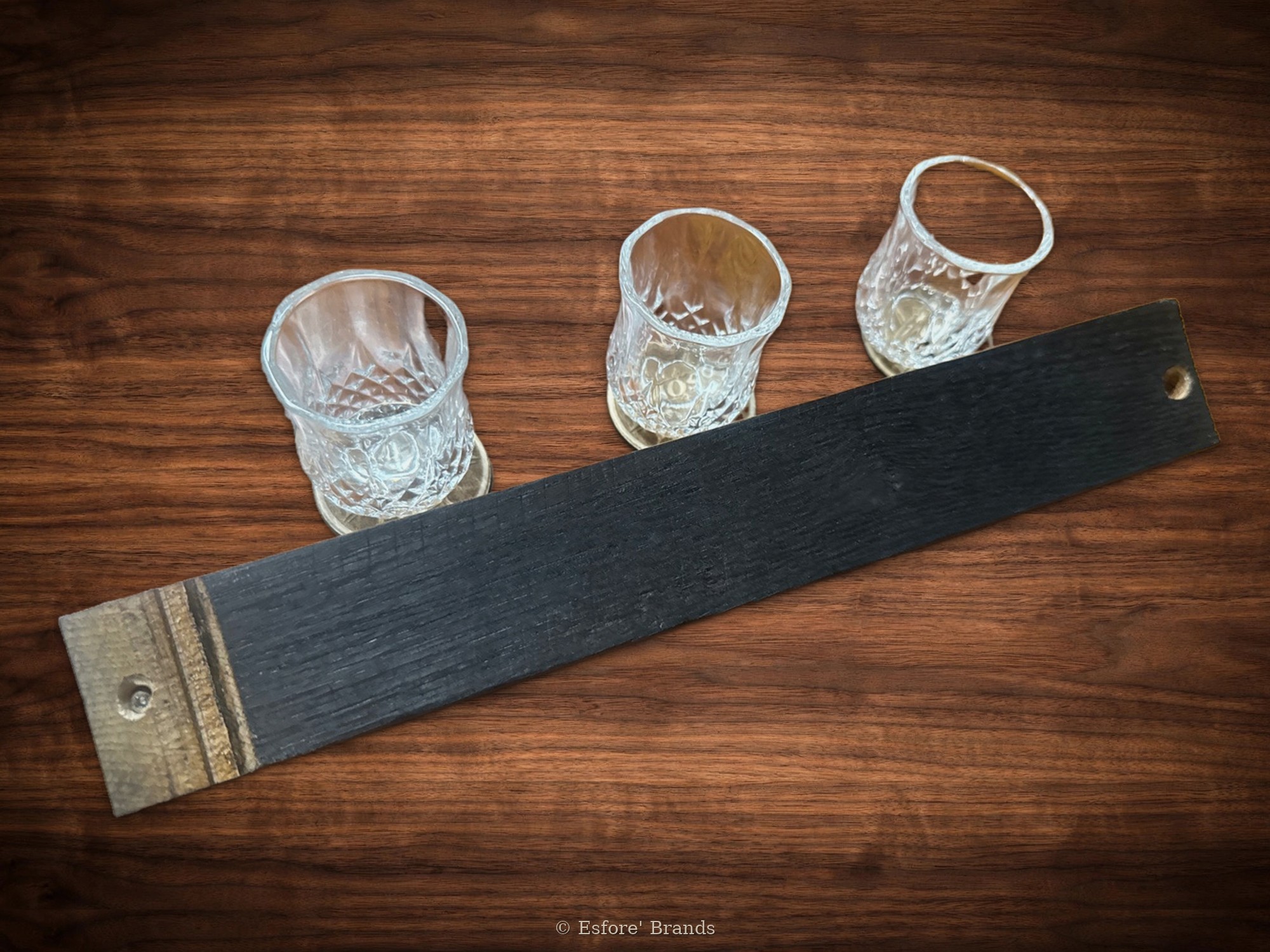
Beneath that blackened crust, the heat is doing chemistry. In a band of wood just under the char — tasters and coopers call it the red layer — the temperature is high enough to break down the oak's hemicellulose into simple sugars and caramelize them, and to begin freeing vanillin from the lignin. This heat-treated layer is where much of bourbon's signature sweetness and vanilla comes from. Over years in the rickhouse, whiskey cycling in and out of the staves dissolves those compounds and carries them into the spirit — along with the color, which comes entirely from the wood.
The char itself earns its keep too. Those deep cracks multiply the surface the spirit can reach, letting it penetrate further into the stave than smooth wood would allow. And like the charcoal in a filter, the carbon layer helps scrub harsh, sulfury notes from the young spirit, mellowing it as it passes in and out.
How did the practice start? The honest answer is that the stories outnumber the records — barrels reused from fish and salt pork needed cleaning by fire, early coopers burned out interiors to bend staves, and shippers on the Ohio River noticed that whiskey arrived in New Orleans transformed: amber, sweet, and worth more. Whatever the first reason, Kentucky kept the fire. Bourbon law eventually wrote it in: charred new oak, every time. The flavor of bourbon is, in no small part, the flavor of controlled burning.
The Daily Pour is Esfore' Brands' daily bourbon lesson — a new lesson every day on Instagram @esfore_brands, and the full story here on the blog. Good Bourbon, Good People, Great Stories. That's a Good Pour! – Coop
← Previous lesson: The Bung: The Barrel's Only Door · Next lesson: Anatomy of a Barrel: The Week in Review →