
The Daily Pour · Week 2 · Recipe Formulation
Tasting Craft · Friday, November 20, 2026
Wheated vs High-Rye: Taste the Difference
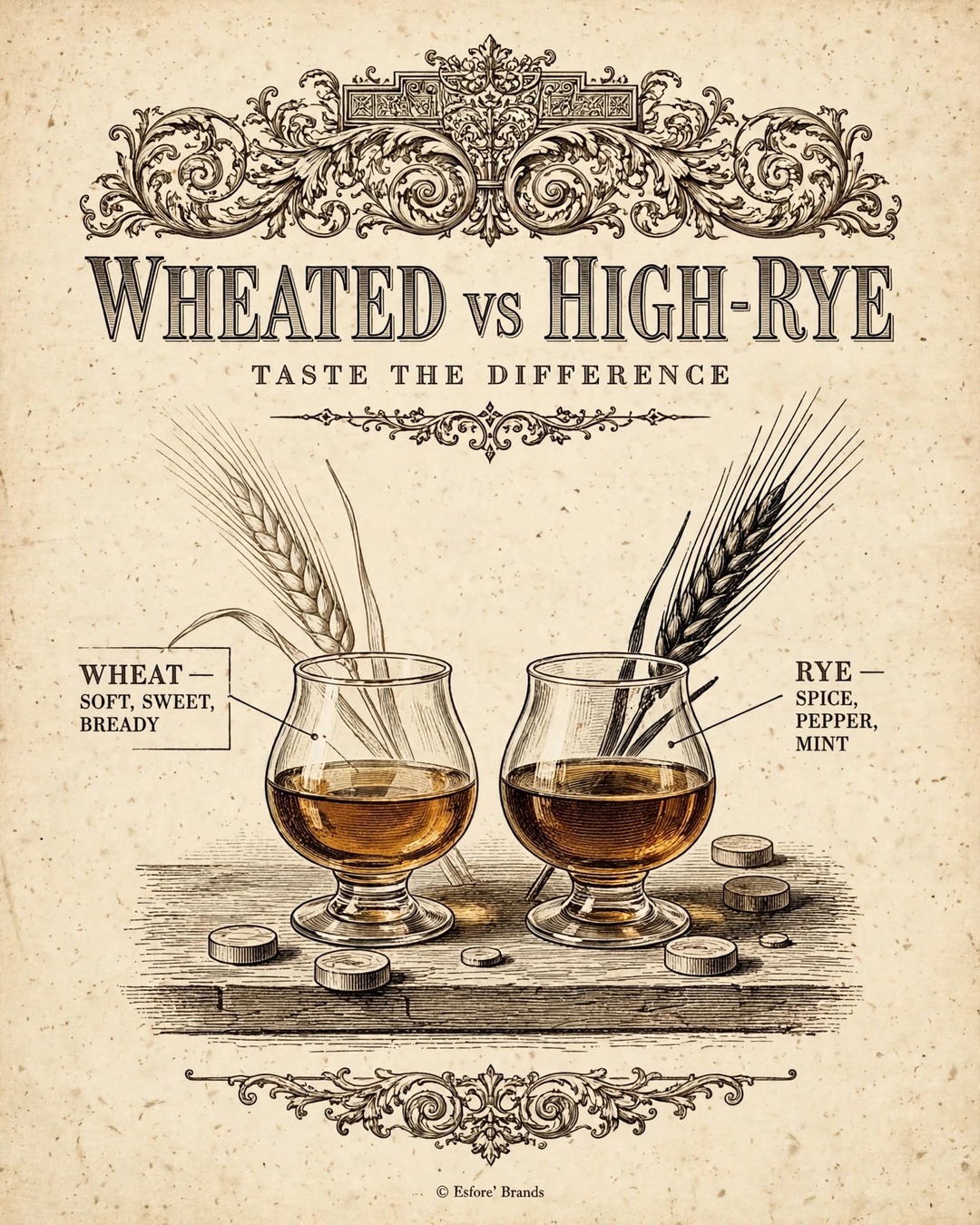
Everything in the mash bill comes down to one question in the glass: does it lean soft or sharp? The wheated-versus-high-rye tasting is where you learn to answer it, and the method is the same one we use for every flight: POUR, NOSE, SIP, SAVOR.
Set it up honestly. Two glasses, same size, same pour. Wheated on the left, high-rye on the right. The classic classroom pair is Maker's Mark and Bulleit: Maker's Mark runs 70 percent corn, 16 percent wheat, 14 percent malted barley; Bulleit runs 68 percent corn, 28 percent rye, 4 percent malted barley. Same corn backbone, same proof range, one swap in the second grain.

Start with the wheated. On the nose it's soft and sweet — fresh bread, a little honey, caramel. On the palate it rolls in round and gentle, vanilla and caramel leading, and it fades the same way it arrived. Wheat doesn't add much flavor of its own; what it does is step out of the way and let the corn's sweetness lead. That's why wheated bourbons read as soft, round, and easy.
Now the high-rye. The nose gives it away before you sip: black pepper, mint, a little cinnamon, a sharpness in the smell itself. On the palate it comes in spicier and finishes drier, with a warm tingle that lingers after the sip is gone. Rye is the flavor grain that argues back — it brings spice, structure, and a little bite.
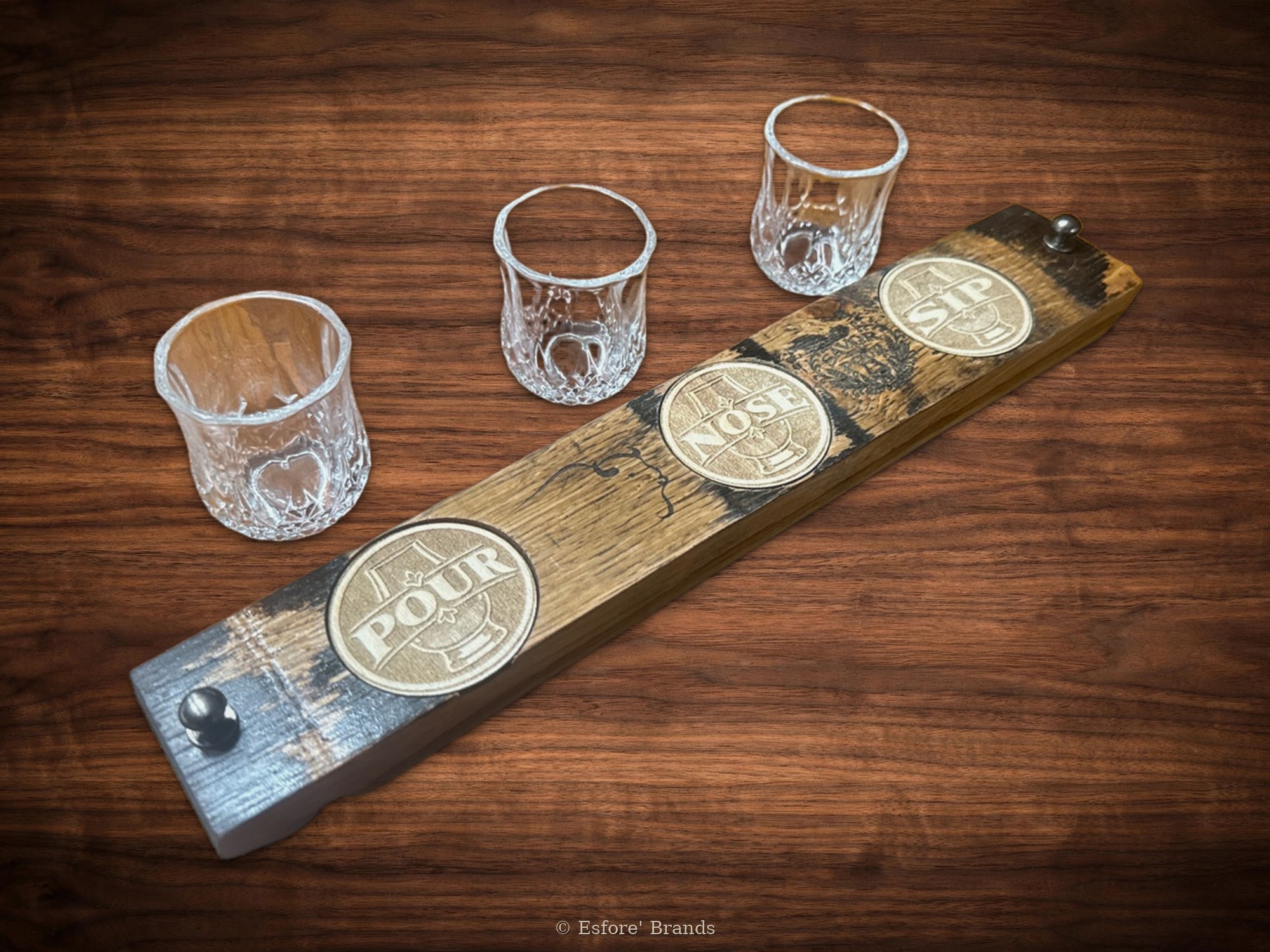
The order matters, and it's worth saying twice: wheated first, high-rye second. Taste the spice first and your palate goes a little numb to the softness. Taste the soft one first and the contrast jumps out at you.
Neither style is better. That's the whole point of the exercise. Wheat softens, rye sharpens, and your palate gets to vote. Pour both, run the four steps, and pick a side — then pour them again next week and see if your answer holds.
The Daily Pour is Esfore' Brands' daily bourbon lesson — a new lesson every day on Instagram @esfore_brands, and the full story here on the blog. Good Bourbon, Good People, Great Stories. That's a Good Pour! – Coop
← Previous lesson: Yeast: The Living Ingredient · Next lesson: Limestone Water: Kentucky's Gift →