
The Daily Pour · Week 2 · Recipe Formulation
Words of Whiskey · Thursday, November 19, 2026
Yeast: The Living Ingredient
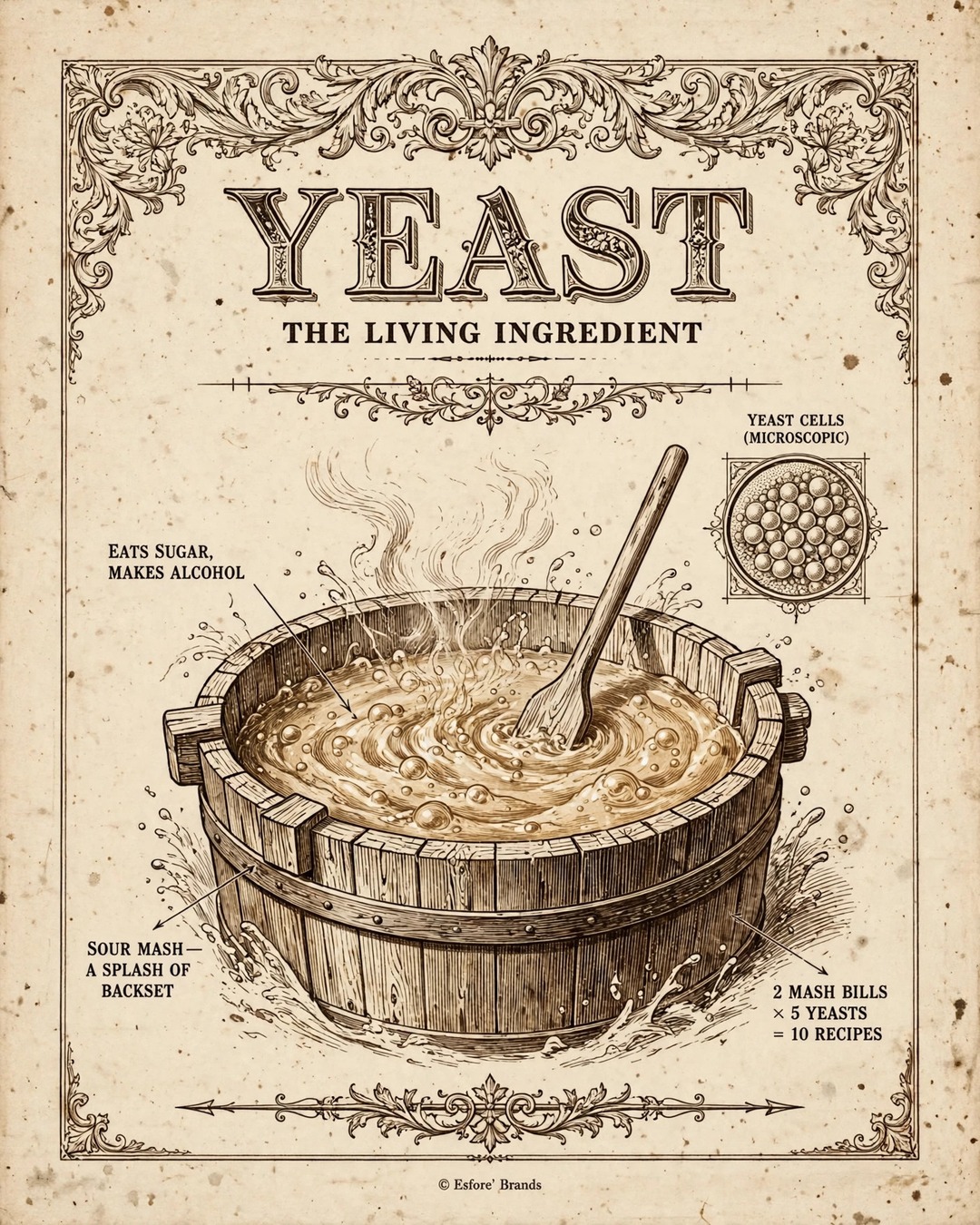
Every ingredient in bourbon is a grain, a mineral, or a piece of oak — except one. Yeast is alive, and it's the only ingredient that does any actual work.
Here's the job. The distiller cooks the grain and lets the malted barley's enzymes turn starch into sugar. Then the yeast is pitched into the sweet mash, and fermentation begins: over a few days of bubbling, the yeast eats the sugar and produces alcohol and carbon dioxide, turning the mash into a rough beer of roughly 8 to 10 percent alcohol. That beer is what goes to the still.

But yeast doesn't just make alcohol. As it ferments, it produces flavor compounds — fruity, floral notes called esters, among others — that survive distillation and ride all the way into the finished bourbon. Two batches with the same grain and different yeast will not taste the same. Change the yeast, change the bourbon.
That's why distilleries treat their yeast like a family heirloom. Strains are kept alive for generations, guarded, and in some cases never leave the distillery. Four Roses makes the point better than anyone: two mash bills crossed with five proprietary yeast strains gives ten distinct bourbon recipes, each with its own four-letter code printed on the label. Same distillery, same water, same barrels — ten different whiskeys, because the yeast changed.
Keeping all of that steady is the job of sour mash, Kentucky's old housekeeping trick. Before the yeast goes in, the distiller stirs back a portion of the previous batch's spent mash — the backset, about a quarter of the new mash — which lowers the pH and gives the chosen yeast a head start while discouraging the spoilage bacteria that would make off flavors. The method is usually credited to Dr. James Crow, a Scottish chemist hired by Oscar Pepper in 1838, who measured and wrote down what the old distillers had been doing by feel. And the name is a red herring: "sour" describes the acidic backset, not the whiskey. Sour-mash bourbon doesn't taste sour.
The grain writes the recipe. The yeast cooks it. Next week, the still takes over.
The Daily Pour is Esfore' Brands' daily bourbon lesson — a new lesson every day on Instagram @esfore_brands, and the full story here on the blog. Good Bourbon, Good People, Great Stories. That's a Good Pour! – Coop
← Previous lesson: Taste the Recipe: A Side-by-Side at the Bench · Next lesson: Wheated vs High-Rye: Taste the Difference →